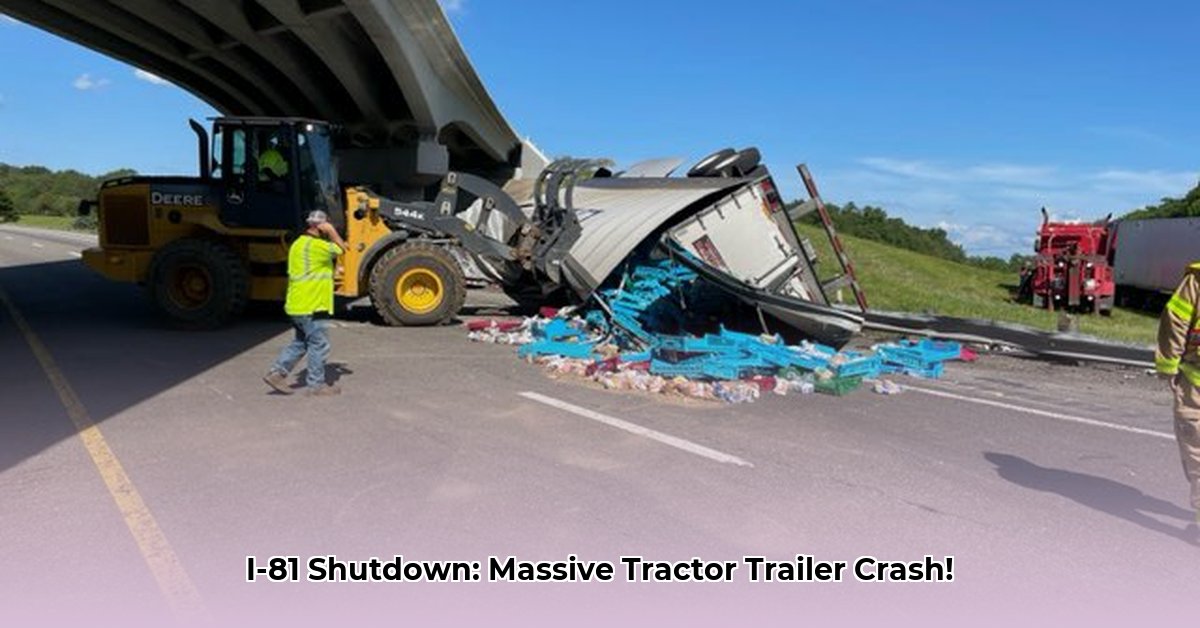
A tractor-trailer accident on Interstate 81 near mile marker 210.7 in Augusta County, Virginia, resulted in a significant ammonia leak and a prolonged interstate shutdown, causing major traffic delays and highlighting critical safety concerns. This incident underscores the interconnectedness of our transportation systems and the need for improved emergency response and preventative measures. For more on truck parking, see this resource.
The Crash and its Immediate Impact
The accident occurred when the driver of a southbound semi-truck experienced a medical emergency, losing control of the vehicle. The truck veered off course, sideswiping another vehicle before coming to a stop. The subsequent ammonia leak triggered an immediate and extensive emergency response. Virginia State Police swiftly closed I-81 in both directions, leading to significant traffic congestion and impacting commuters and supply chains across the region. The closure lasted several hours. The resulting backup forced drivers onto Route 11, a smaller road quickly overwhelmed by the diverted traffic.
Widespread Consequences and Long-Term Implications
The impact of the I-81 closure extended far beyond Augusta County. The resulting traffic congestion stretched for miles, causing significant delays on Route 11, the primary detour. The presence of hazardous materials further complicated the situation, necessitating the involvement of specialized hazmat teams and extending the cleanup process. This incident serves as a stark reminder of the fragility of our transportation network and the potential for cascading effects from seemingly isolated incidents. One accident can quickly ripple outward, crippling a much larger area.
How can we prevent similar incidents from causing such widespread disruption? This accident necessitates a thorough review of current safety protocols and emergency response plans.
Actionable Intelligence: Immediate and Long-Term Solutions
Addressing the issues highlighted by this accident requires a multi-pronged approach encompassing both short-term and long-term solutions.
Short-Term Actions (Within One Year):
- Enhanced Driver Health Protocols: The Virginia State Police should implement stricter driver health protocols, including more frequent screenings and rigorous medical evaluations. Improved communication systems are also needed for faster incident reporting.
- Improved Traffic Management: The Virginia Department of Transportation (VDOT) should enhance traffic management strategies for large-scale closures, utilizing real-time data to optimize traffic flow and explore temporary solutions to alleviate congestion in detour areas.
- Enhanced Emergency Response Coordination: Emergency responders need improved inter-agency coordination and communication during hazmat incidents, achieved through increased joint training and refined protocols. Sufficient resources must be readily available for swift and effective responses.
- Strengthened Trucking Industry Protocols: Trucking companies should reinforce driver health monitoring programs, including mandatory fitness-for-duty checks, and prioritize vehicle maintenance to prevent mechanical failures.
- Improved Community Preparedness: Local communities should develop detailed, accessible detour plans and establish effective communication channels to keep residents informed during emergencies.
Long-Term Actions (Within 3-5 Years):
- Advanced Driver Training: The Virginia State Police should implement advanced driver training programs focusing on driver safety, defensive driving, and hazard awareness. Encouraging the adoption of advanced driver-assistance systems (ADAS) in commercial vehicles is also crucial.
- Infrastructure Improvements: VDOT should develop comprehensive contingency plans to mitigate the impact of major highway closures and invest in infrastructure improvements, such as adding lanes and reinforcing median barriers on I-81.
- Advanced Hazmat Response Capabilities: Emergency responders should secure additional hazmat resources and invest in cutting-edge chemical neutralization technologies for faster and safer cleanup.
- Stricter Vehicle Maintenance and Driver Monitoring: Trucking companies must mandate regular vehicle safety inspections and implement stricter driver fatigue monitoring programs.
- Strategic Transportation Planning: Local communities should advocate for highway improvements, including widening roads and creating alternative routes, to reduce reliance on single arterial routes.
Risk Assessment Matrix: Identifying and Mitigating Vulnerabilities
The I-81 accident highlights several key risk factors requiring attention:
| Risk Factor | Risk Level | Mitigation Strategies |
|---|---|---|
| Transportation of Hazardous Materials | High | Improved regulations, better tank designs, advanced leak detection systems |
| I-81 Infrastructure Condition | Medium | Regular inspections and improvements, advanced safety features |
| Effectiveness of Emergency Response | Medium | Improved inter-agency communication, enhanced training, readily accessible resources |
| Driver Health and Fatigue | High | Mandatory health screenings, advanced driver monitoring systems, stricter fatigue management regulations |
Preventing Future Interstate Closures Due to HazMat Incidents
The I-81 incident underscores the urgent need for comprehensive strategies to prevent and mitigate the impact of hazardous materials accidents on interstate highways. This requires a collaborative effort involving government agencies, trucking companies, emergency responders, and the public. A proactive approach, incorporating preventative measures and improved response protocols, is essential to ensure the safety and efficiency of our transportation networks. Failing to address these vulnerabilities increases the risk of future disruptions and potentially catastrophic consequences. The cost of prevention is significantly less than the cost of reacting to these incidents.